Structures

Turn Stress into Strength with Ansys Structural Simulation

Empower your engineering designs with world-class Ansys products for structural analysis, life-cycle analysis, and crash analysis. From concept to final product, ensure your structures are safe, reliable, and high-performing.

Ansys Structures is a comprehensive structural simulation platform designed to help engineers and enterprises analyze, validate, and optimize structural components and systems. Whether it’s aerospace, automotive, industrial equipment, or consumer products, Ansys Structures provides powerful tools.

Engineers can predict how components will behave under real-world conditions, reduce physical prototyping, minimize costs, and accelerate product development cycles.

Core Products
Ansys Mechanical

View More →

Ansys LS-DYNA

View More →

Ansys Motion

View More →

Highlights of Structural Simulation

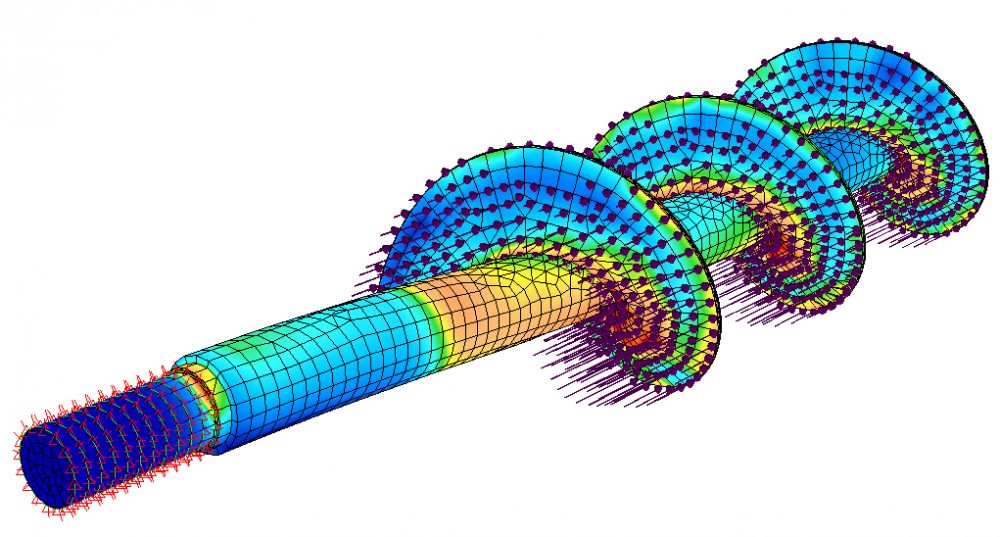
Linear & Nonlinear Structural Analysis

From small deformations to extreme load events, accurate linear and nonlinear simulations help engineers ensure structural integrity, safety, and performance — long before physical testing.

Key Capabilities

Perform static and transient stress, strain, and deformation analysis

Simulate material and geometric nonlinearities (plasticity, hyperelasticity, large deflection)

Handle complex boundary conditions, contacts, and load cases

Analyze performance under real-world conditions with high numerical stability

Benefits

Ensure structural integrity under realistic conditions

Predict failure points before physical testing

Optimize design without overengineering

2025_11_18_05_14_06_050_723800

Fatigue, Creep & Durability

Real components face repeated loads and elevated temperatures over their service life. Fatigue and creep analysis helps engineers anticipate failures before they happen, ensuring reliability and compliance with safety standards.

Key Capabilities

Predict fatigue life under cyclic, variable, or random loading

Simulate time-dependent material behaviors such as creep and stress relaxation

Evaluate damage accumulation and crack initiation points

Support high-cycle, low-cycle, and thermo-mechanical fatigue analysis

Benefits

Extend product life through informed design improvements

Reduce maintenance costs and unplanned downtime

Ensure safety and durability under real operating conditions

2025_11_18_05_14_50_764_141252

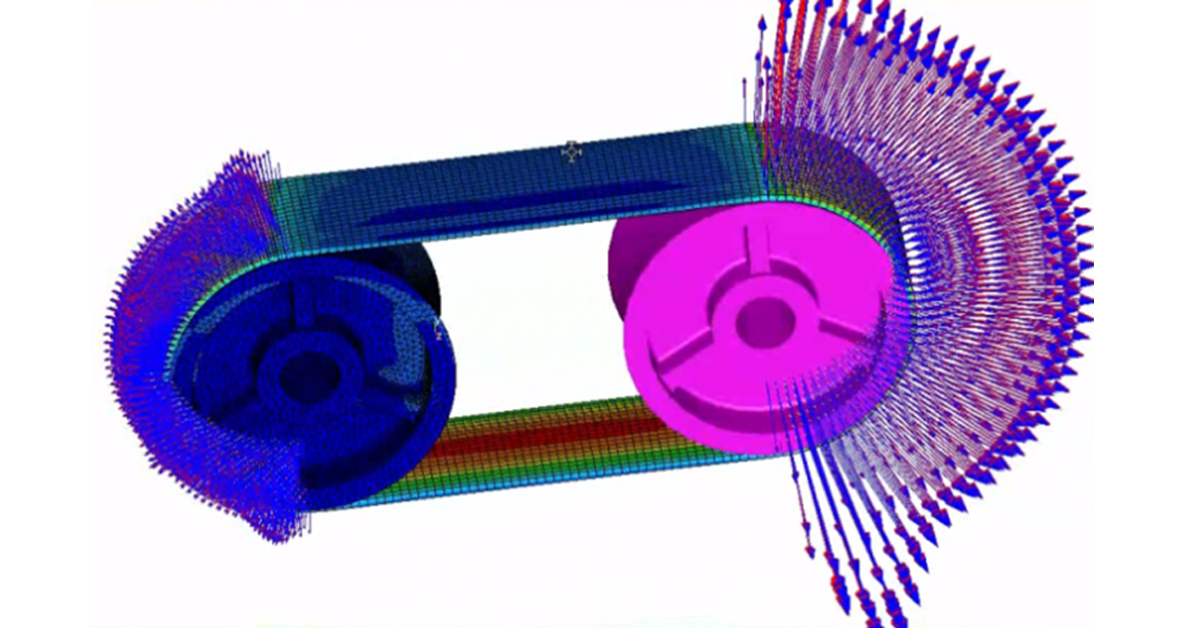
Dynamic, Modal & Stability Simulations

Structures experience vibrations and dynamic forces that can lead to resonance or instability. Dynamic and modal simulations enable engineers to predict and control these effects, ensuring structural integrity and comfort.

Key Capabilities

Perform modal, harmonic, transient, and random vibration analyses

Evaluate natural frequencies, mode shapes, and resonance behavior

Assess structural stability under buckling or dynamic loads

Simulate real-world excitations such as impact, shock, and seismic events

Benefits

Avoid resonance and vibration-related failures

Ensure safe operation under dynamic conditions

Optimize lightweight structures without compromising safety

2025_11_18_05_15_45_533_942914

Thermal & Multiphysics Coupling

Thermal and multiphysics interactions directly affect product performance, material behavior, and lifespan. Coupled simulations enable engineers to predict real-world thermal-structural responses and design with higher confidence.

Key Capabilities

Simulate steady-state and transient heat transfer in solids and fluids

Couple thermal effects with structural, fluid, or electromagnetic simulations

Evaluate thermal stresses, expansion, and fatigue under varying temperatures

Model radiation, convection, and conduction with high precision

Benefits

Accurately capture real-world operating conditions

Optimize designs exposed to heat, flow, or EM effects

Reduce costly iterative testing across domains

2025_11_18_05_26_57_415_975555

Optimization & Topology Analysis

Optimization and topology analysis help engineers achieve the perfect balance between strength, weight, and efficiency, driving innovation while reducing material use and production costs.

Key Capabilities

Perform shape, size, and topology optimization for lightweight, high-performance designs

Integrate parametric studies to explore design alternatives automatically

Apply constraints for strength, stiffness, or frequency targets

Seamlessly link with CAD tools for design refinement and validation

Benefits

Minimize material usage and weight

Accelerate innovation through rapid iteration

Enhance performance without compromising safety

2025_11_18_05_28_34_283_585667

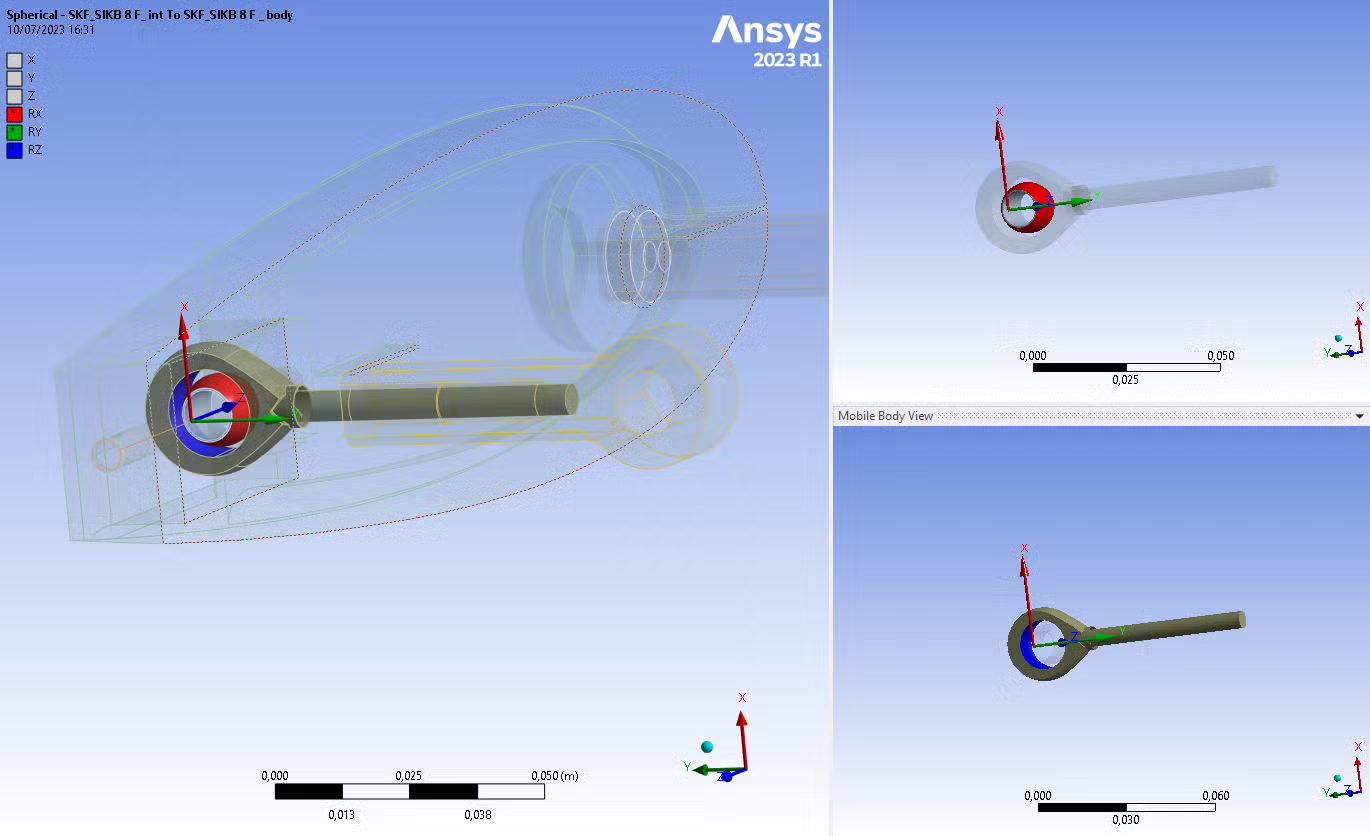
Contact & Joint Assemblies

Most designs are multi-part assemblies. Accurate contact modeling ensures that load paths, stresses, and deformations across interfaces behave exactly as they would in reality.

Key Capabilities

Simulate bonded, frictional, and sliding contacts with precision

Define realistic joints (revolute, spherical, translational, etc.)

Model bolts, welds, adhesives, and fasteners under complex loading

Capture nonlinear contact behavior, load transfer, and separation

Benefits

Predict interface behavior under real loading

Reduce risk of joint and fastener failures

Improve accuracy of full-assembly simulations

2025_11_18_05_29_35_196_238999

Applications Across Industries

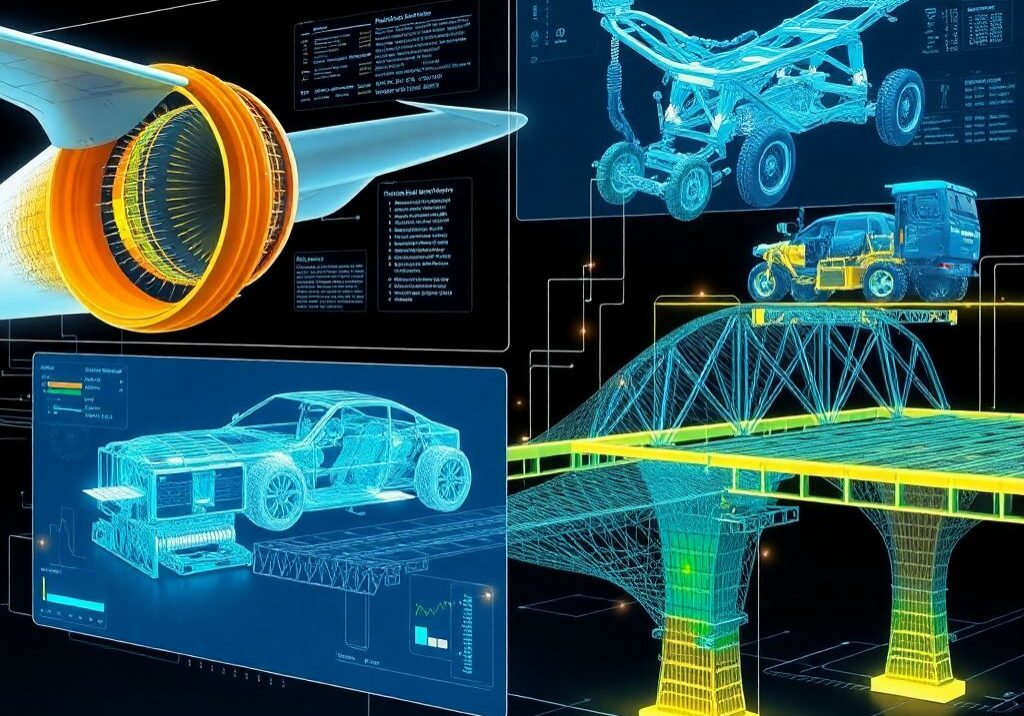
Structural simulations play a crucial role across a wide range of sectors — from aerospace and automotive to heavy machinery and civil engineering.
At SolidTrust Technologies, our solutions are tailored to meet the unique needs of every domain we serve.
2025_11_18_05_12_33_879_660726

Relevant FAQs

Can I perform fatigue analysis using Ansys Mechanical? +

Yes, Ansys Mechanical enables high-cycle, low-cycle, and thermo-mechanical fatigue analysis to predict component life accurately.

Does Ansys Mechanical support nonlinear structural simulations? +

Absolutely, it handles plasticity, hyper elasticity, and large deflection for realistic structural behavior.

Can I simulate contact and joints in assemblies? +

Yes, bonded, frictional, and sliding contacts with bolts, welds, and fasteners can be accurately modeled.

Can thermal and Multiphysics effects be included in structural analysis? +

Yes, Ansys allows coupled thermal-structural and multiphysics simulations for real-world operating conditions.

Can I perform modal, dynamic, and buckling analysis? +

Yes, you can assess natural frequencies, mode shapes, vibrations, and structural stability under dynamic loads.

Does Ansys Mechanical help with topology and optimization analysis? +

Yes, it enables geometry and material optimization to create lightweight, high-strength, and cost-effective designs.

Can complex geometries be validated with FEA in Ansys? +

Yes, finite element analysis can validate structural performance of intricate components under realistic loads.


Success Stories

Ready to unlock the full potential of Ansys Structural Simulation?

Get expert support, pricing details, and training from SolidTrust Technologies, your trusted partner for Ansys software in South India.
2025_11_18_05_08_46_759_270180
We’re Online! How may I help you today?