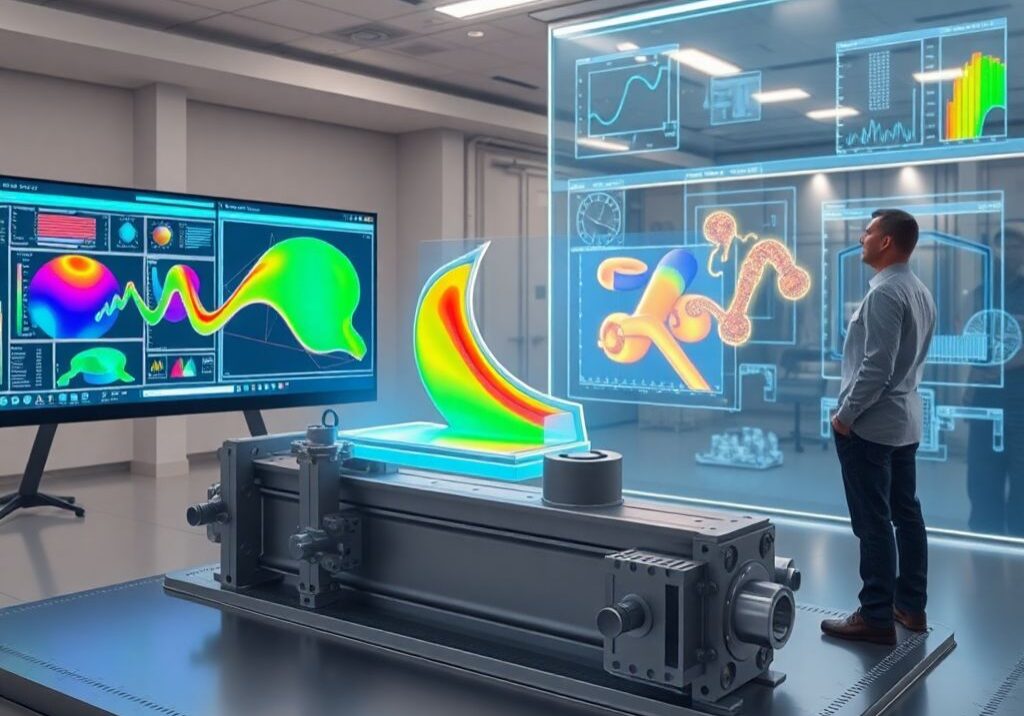
Ansys LS-DYNA is specifically designed for solving nonlinear, high-speed, and highly dynamic events that traditional FEA tools cannot handle efficiently. It combines advanced explicit and implicit solver technology to simulate real-world impact, crash, and deformation events. Industries including automotive, aerospace, defense, and manufacturing leverage LS-DYNA to develop safer, more efficient products.
What’s in it for Engineers
High-Impact and Crash Simulations:
Engineers benefit from LS-DYNA ability to simulate complex dynamic events like car crashes, explosions, and impact tests. It's ideal for automotive safety, aerospace crashworthiness, and defense applications where high-impact simulations are critical.
Nonlinear Dynamic Analysis:
LS-DYNA handles nonlinear materials, large deformations, and contact problems—perfect for testing extreme scenarios like impact, drop tests, and high-speed collisions.
Real-Time Performance Feedback in Extreme Events:
Unlike other solvers, LS-DYNA provides real-time results, allowing engineers to adjust designs on-the-fly, which is crucial for industries with stringent safety regulations like automotive and defense.
Featured Applications
Ansys LS-DYNA is a highly advanced finite element analysis (FEA) software widely used for solving complex, nonlinear problems in both static and dynamic simulations. Here are some key applications where LS-DYNA excels:
Automotive Industry
Aerospace & Defense

Industrial Equipment & Machinery

Construction & Infrastructure

Consumer Electronics

Sports Equipment
Energy & Power Generation
Material Testing & R&D
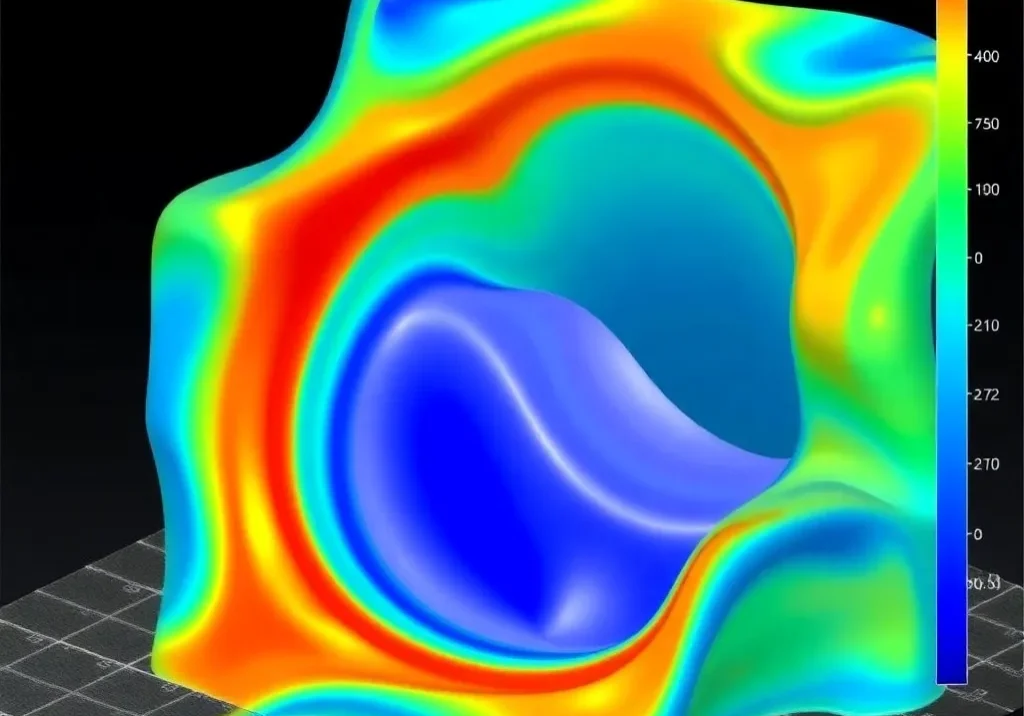
Medical Device Design

Defense & Military Applications

Relevant FAQs
Yes, it excels in simulating highly dynamic events such as crashes, impacts, and explosions.
Yes, it supports advanced material models including composites, metals, and plastics under extreme conditions.
It uses arbitrary Lagrangian Eulerian (ALE) methods for large deformation and fluid-structure interactions.
Yes, it integrates fluid dynamics with structural mechanics for accurate FSI simulations.
Yes, it handles high-velocity impact, blast, and explosive events effectively.
It simulates crash scenarios, including occupant safety, vehicle deformation, and energy absorption.
Yes, it efficiently simulates complex multi-body contact interactions, including friction and material failure.
Ready to unlock the full potential of Ansys LS-DYNA?
Explore how LS-DYNA advanced simulation capabilities can help you solve complex, real-world problems in automotive, aerospace, and manufacturing.